Table of contents
With European cities reporting sustained pressure on visitor hotspots, from Prague’s Old Town to alpine trailheads near major ski domains, a quiet shift is under way: more travellers are choosing guided excursions not as a luxury add-on, but as a tool to travel smarter, safer, and with fewer regrets. The appeal is not only convenience, it is also access, timing, and local knowledge that can turn an overcrowded afternoon into a well-paced day, and a daunting hike into a manageable, memorable outing.
Guides are becoming crowd-control strategists
Skip-the-line is not a slogan anymore, it is a survival tactic. Across Europe, timed-entry systems, security checks, and pedestrian bottlenecks have changed what a “simple visit” looks like, and travellers who misjudge peak hours routinely lose half a day to queues and detours. In Prague, for example, the historic core concentrates most footfall within a compact area, and the difference between arriving at Charles Bridge at 7:30 and at 10:30 can feel like two different cities. The same logic applies to museums with reservation-only slots, and to neighbourhoods where street capacity has become a real constraint, especially during weekends and school holidays.
Guided excursions increasingly function as a form of crowd navigation, because experienced operators build itineraries around flow rather than around a checklist. They know when tour groups from cruise ships typically surge into certain streets, they track seasonal shifts that change the rhythm of a city, and they can reroute when a demonstration, a road closure, or a last-minute venue restriction disrupts the plan. That agility is difficult to replicate with a DIY schedule downloaded the night before, and it has a measurable effect on what travellers actually get: more time inside sites, fewer dead hours, and less decision fatigue. For people with limited days off, or families trying to keep a group moving, that “invisible logistics” can be the difference between a holiday that feels efficient and one that feels like constant triage.
The hidden economics of a “cheaper” DIY day
Everyone loves the idea of saving money, until the receipts add up. A self-planned day can look inexpensive on paper, and then slowly expand through small, predictable leaks: last-minute taxis after missing a connection, premium-priced tickets bought from resellers when official slots sell out, duplicate transit fares after choosing the wrong zone, or paid lockers and baggage storage because timing did not account for check-in windows. Add to that the cost of mistakes, like showing up to a landmark on the wrong day of the week, or underestimating how far “walkable” really is when temperatures spike, and the budget begins to resemble the guided option you initially dismissed.
Guided excursions also bundle value in ways travellers often overlook. Transport is the obvious one, especially on intercity day trips where the price of trains, fuel, parking, and tolls can swing widely, and where unfamiliar rules can lead to fines. The less obvious value sits in time. Economists have long argued that time is a scarce resource, and on a short break it becomes the scarcest of all, yet many itineraries treat it as free. A guide who sequences stops intelligently, and who steers you away from dead ends, can compress “must-do” experiences into a realistic schedule without turning the day into a sprint. If you are comparing options for Prague and beyond, click here for more info, and evaluate what is included, from entry policies to transport and pacing, because the headline price rarely tells the whole story.
In the mountains, expertise is a safety feature
City tours can be forgiving, mountain hikes are not. Weather turns fast, trail markings vary by region, and altitude, heat, and fatigue change how people move and think, even when the route looks simple on an app. European rescue services repeatedly warn that many incidents involve visitors who are not reckless, just underinformed, leaving late, packing light, and trusting a phone signal that disappears in the wrong valley. The risk profile also shifts with the season. Early summer can bring lingering snowfields on shaded sections, autumn can shorten daylight sooner than expected, and shoulder months can blur the line between “hiking” and “mountaineering” in a matter of metres.
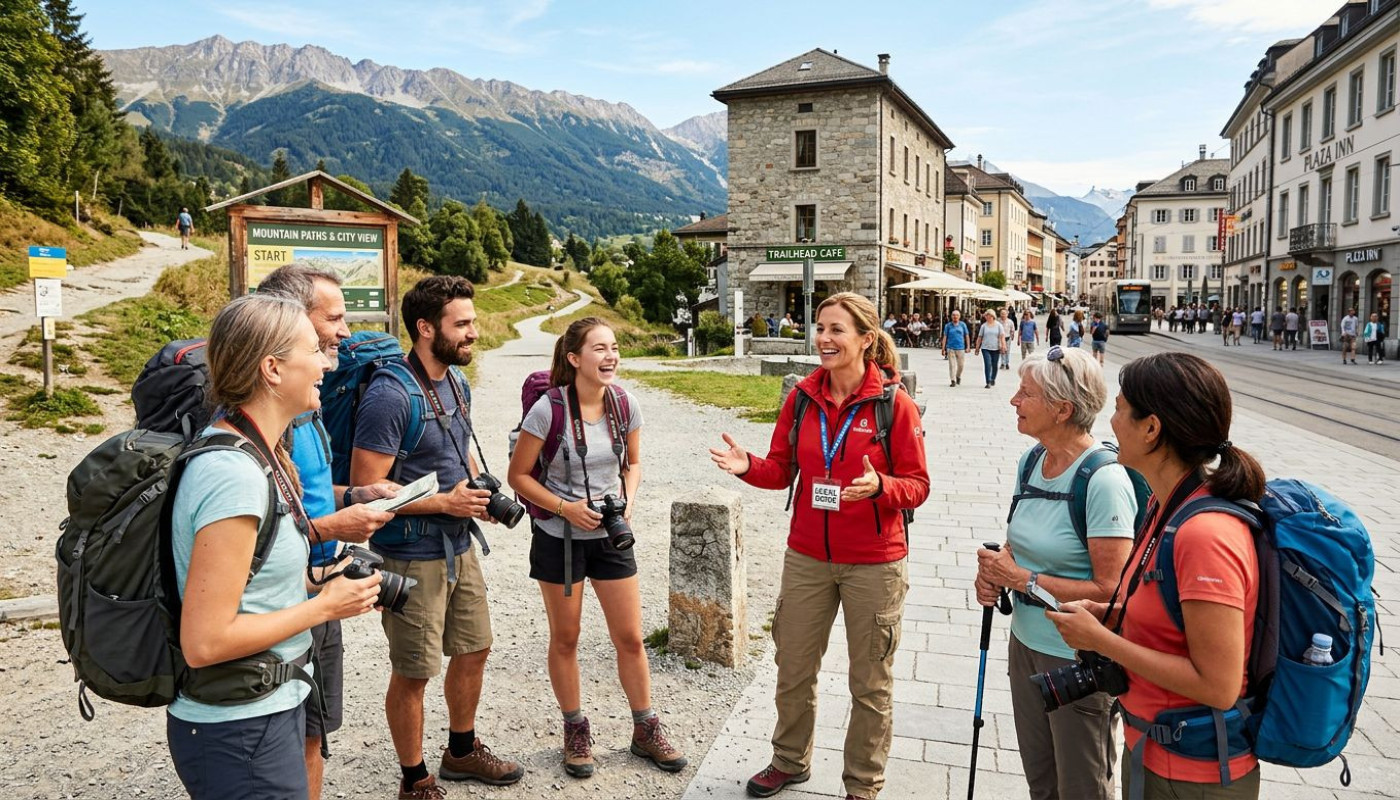
That is where guided excursions show their most tangible value, because a capable guide is not only narrating landscapes, they are reading conditions, managing group energy, and making conservative decisions before the situation becomes urgent. They know when to turn back, how to interpret cloud build-up, and how to adjust a route if the group’s pace drops below the safe threshold for a return before dark. They also carry local context that apps cannot provide, such as which ridges catch wind, which streams swell after storms, and which trail intersections tend to confuse newcomers. In practical terms, that expertise can prevent minor mishaps from becoming major incidents, and it can turn a hike into a learning experience, not a gamble. For travellers who want the views without the anxiety, the guide is less a storyteller than a risk manager with boots on the ground.
Local insight is what makes a trip stick
Information is everywhere, insight is rare. Most travellers can recite the headline facts about a city, and most can follow a popular route to a famous viewpoint, but the moments people remember tend to be the ones that feel discovered, not merely consumed. A good guide earns their place when they can connect the dots: why a street looks the way it does, how a political decision shaped a neighbourhood, what a craft tradition means to the people still practising it. In Prague, that might mean explaining how layers of empire, occupation, and transition remain visible in architecture and public space, and why certain districts feel distinctly different even within a short tram ride.
Guided excursions also create a kind of permission structure. Travellers are more likely to try a local snack, step into a small gallery, or take a detour to a less photogenic, more authentic place when someone knowledgeable is there to contextualise it, and to reassure them they are not wasting time. That matters in an era when overtourism can flatten destinations into a loop of the same “top ten” stops, and when social media pressures people into chasing identical shots rather than forming their own impressions. The best guides counter that homogenisation by widening the frame, and by offering choices: a quieter route, a different angle, a story that complicates the postcard. At its best, a guided day does not replace independent travel, it upgrades it, leaving visitors more confident to explore alone on the following days.
How to book without overpaying
Start with timing, then work backwards. Popular city tours and day trips sell out on weekends and during holiday peaks, so booking early can secure better departure times, clearer cancellation terms, and sometimes lower prices. Set a realistic budget that includes transport and entrance fees, and check what is bundled, because the cheapest ticket can become expensive if key costs are excluded.
Look for transparent itineraries, small-group caps, and clear meeting points, then ask about accessibility and pacing. If you are eligible for youth, student, or senior reductions, or travelling with children, verify discounts in advance. In some destinations, tourist cards and municipal passes can offset entry costs, so compare before you confirm.
Similar articles