Table of contents
Everyone says they want a “real break”, yet many holidays now look like a second job, with sunrise hikes, booked-out tastings, museum time slots and a running list of “must-dos” that quietly turns rest into performance. In 2024 and 2025, travel data has shown strong demand for both high-intensity itineraries and slower, wellness-led escapes, and that tension is playing out in cities, coastlines and countryside alike. The question is no longer where to go, but how much to do once you get there.
When “making the most of it” backfires
It starts innocently, with a promise to “see everything”, and it ends with holiday fatigue that feels suspiciously like burnout, because activity overload often mirrors the same dynamics people are trying to escape at home: constant scheduling, social pressure and the sense that time must be optimised. The travel industry has helped normalise that pace; guided excursions, timed-entry attractions and algorithm-driven suggestions make it easy to stack plans without noticing the cumulative cost. Even the language of travel has shifted, with “itinerary”, “bucket list” and “hidden gems” framing leisure as a task to complete rather than an experience to inhabit.
The psychology is well documented, and it is not unique to travel. Researchers such as Roy Baumeister and colleagues have long explored ego depletion and self-regulation limits, while more recent work on decision fatigue suggests that too many choices, even pleasant ones, can reduce satisfaction and increase irritability. On holiday, that plays out in small but telling ways: the third museum becomes a blur, the “quick” detour turns into an argument, and the evening meal feels more like logistics than pleasure. Add the social layer, and the stakes rise; in an age of sharing, doing less can feel like missing out, even when doing more is what makes people miserable.
The numbers underline why this is happening now. In 2024, global tourism fully regained and then surpassed pre-pandemic levels, with the UN World Tourism Organization reporting international tourist arrivals at roughly 1.3 billion in 2023 and continuing growth into 2024, and that volume has intensified competition for time slots, tables and experiences in popular destinations. Meanwhile, the wellness economy continues to expand; the Global Wellness Institute has projected strong growth in wellness tourism across the decade, signalling a parallel desire for restoration. These two impulses, maximise and recuperate, are colliding in the same traveller, sometimes in the same day.
There is also a structural reason overload feels unavoidable: many trips are shorter. With limited annual leave, travellers compress ambitions into long weekends, and low-cost flights make “micro-breaks” common, but micro-breaks often come with macro expectations. The result is a holiday that looks impressive on paper yet delivers diminishing returns in the body, and when people return home needing a recovery weekend, the entire premise of time off has been inverted.
The new holiday divide: sprint or slow?
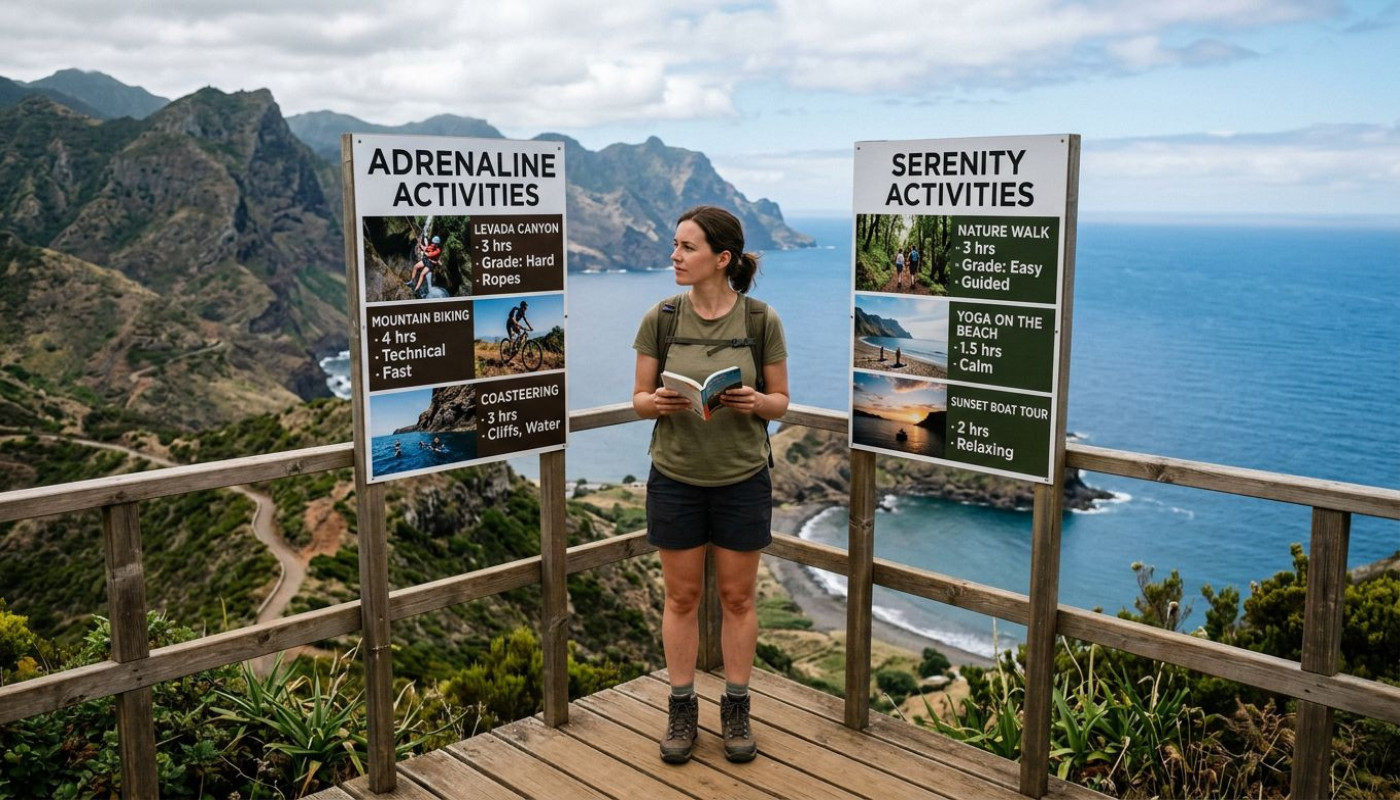
The travel market is increasingly bifurcated, and you can see it in booking behaviour: some travellers chase high-energy, experience-heavy days, while others deliberately construct empty space, and both groups insist they are doing it “right”. Booking platforms have leaned into this split, promoting adventure bundles on one side and spa, nature and “digital detox” packages on the other, and even cities now market themselves with dual identities, offering nightlife and adrenaline next to parks, waterside walks and quiet neighbourhoods that promise calm.
Industry data points to the scale of the trend. Expedia Group’s annual travel outlooks have repeatedly highlighted the rise of “detour destinations” and trip-stacking, where travellers add extra stops to one journey, and that stacking can easily become stacking activities too. At the same time, surveys by consultancies such as McKinsey have noted growing consumer interest in wellness and experiences that support mental health, and that includes travel choices designed around sleep quality, nature access and lower stimulation. On the ground, that can mean a morning of whisky tastings and afternoon spa time, but the combination only works when the tempo is intentional rather than accidental.
This divide is not just about personality; it is also about context. Families with children often lean into activities because structure helps, and parents feel pressure to “make memories”, while solo travellers may overbook to avoid loneliness in the gaps. Couples can fall into overload because they are trying to satisfy two wish lists at once, and groups tend to over-schedule because consensus feels easier with a packed plan, even if it leaves no room for spontaneity. In each case, the itinerary becomes a way of managing anxiety, not a tool for enjoyment.
Destinations like Edinburgh illustrate the tension neatly. It is a walkable city with intense cultural density, from historic sites to food and drink experiences, and it is also a place where the best moments can be slow, with an unplanned hour in a bookshop, a long lunch, or a late stroll when the crowds thin out. When travellers try to do both at full speed, the city can feel overwhelming; when they choose their pace, the same streets can feel restorative. For those building a trip around tastings or local spirits, a practical starting point is to map experiences geographically and leave margins, and if you want to explore options without turning it into a checklist, you can browse https://www.edinburgh-spirit.com/ as a reference point and then decide what genuinely fits your energy.
Designing days that leave breathing room
There is a simple test that many travellers skip: if your holiday schedule resembles a conference agenda, it will likely produce conference-level fatigue. The fix is not to do nothing, but to reduce friction, because friction is what drains people: queues, transport changes, rushed meals and constant decision-making. A well-designed day often has one anchor activity, one flexible secondary plan and one protected block of unscheduled time, and that structure preserves both anticipation and recovery. It also creates room for the unexpected, which is where many trips become memorable.
Start with anchors that match the destination. In a city break, an anchor could be a guided tour, a tasting, a theatre evening or a museum you truly care about, and the key is to pick what you would regret missing, not what you feel you “should” do. Then design the rest of the day around proximity and rhythm, because moving across town repeatedly is a hidden stressor, and mismatched pacing, like pairing an early hike with a late-night bar crawl, is a reliable way to feel awful by day three. If you are travelling with others, agree on the anchor first, then offer optional add-ons; forcing everyone into every activity is a common route to resentment.
Breathing room also means protecting the basics. Sleep is the first casualty of overload, yet it is the main driver of mood, patience and memory, and travel often adds sleep disruptors: new beds, noise, alcohol and late meals. A practical rule is to schedule at least two “early nights” on a week-long trip, and to avoid consecutive high-intensity days; athletes call this recovery, and tourists need it too. Food matters in the same way, because skipping meals or eating only on the run amplifies stress and makes small problems feel big. A sit-down lunch can be the difference between a good afternoon and a tense one, and it is often cheaper than impulse snacking.
Finally, be honest about the role of phones. Navigation helps, but constant searching and comparing does not. If you are repeatedly checking reviews mid-walk, you are not in the place you travelled to; you are back in an optimisation loop. Pre-save a short list of places, then let the day unfold, and if you want to keep an element of discovery, set a single “wildcard” slot, a window where you choose spontaneously based on how you feel. That is how serenity becomes a design choice rather than an accident.
Adrenaline is great, but dose matters
High-energy travel is not the villain, and for many people it is the point, because adrenaline can reset attention, deepen friendships and create vivid memories, and a challenging hike or a packed festival day can feel like the opposite of routine. The problem begins when adrenaline becomes the default setting, and the body never returns to baseline. Stress hormones do not care whether the trigger is an email inbox or a sprint between attractions; if the days are intense and the nights are short, the system stays activated, and enjoyment quietly drains away.
A more sustainable approach treats adrenaline like seasoning. Choose the moments you want to be intense, then build calm around them, so the peak feels sharper and the afterglow lasts longer. In practice, that can mean scheduling a demanding activity early in the trip, when energy is highest, then following it with a slower day, and it can also mean pairing stimulating experiences with grounding ones, like a long walk in a green space, a quiet café and a single cultural visit that invites focus rather than consumption. Travellers often assume that relaxation must be earned after “doing enough”, yet it is the relaxation that helps people actually absorb what they are seeing and tasting.
It also helps to define what success looks like before you arrive. If success is “I did everything”, you will fail, because no one does, and the city or region will always have more than a visitor can cover. If success is “I felt present”, you can win with fewer plans, and presence is measurable in its own way: fewer rushed photos, fewer arguments about timing and more moments where you look up and notice where you are. That is not sentimental; it is the practical outcome of a schedule with slack.
There is a broader point here about travel culture. Many destinations are struggling with overtourism, and overload is not only personal; it can intensify crowding at the same headline sites at the same headline hours. Spreading activities across neighbourhoods, travelling off-peak, and allowing unstructured time can reduce pressure on hotspots while improving the visitor experience. Serenity, in that sense, is not just self-care; it is also a more responsible way to move through places that residents still call home.
How to book smarter, spend better
Plan one anchor per day, and book it early if it sells out, then set a clear daily budget for food, transport and paid experiences, because overspending is a fast track to stress. Look for city passes only if you will use them calmly, and check local or national schemes for discounts, student rates and off-peak tickets; the best “aid” is often simply choosing quieter time slots.
https://www.edinburgh-spirit.com/
Similar articles