Table of contents
The travel internet is awash with “must-see” lists, yet the itineraries people remember rarely follow the same template, and in 2026, with overtourism pressures from Venice to Barcelona still shaping local rules, the difference between a good route and a lasting one often comes down to choices that look small on paper. A memorable itinerary is not just efficient, it is emotionally legible, realistic on time, and tuned to a place’s rhythms, because what travelers recount years later is usually a texture, a decision, and a surprise.
Memory starts where the schedule loosens
Ask someone about their best trip, and you will often hear about the hour they “lost,” the afternoon that ran late, the detour that was not in the plan, because memory tends to form around moments that feel self-directed. Tourism researchers have long noted that novelty, emotion, and personal meaning are key ingredients in what becomes a durable memory, and itineraries that over-optimize can accidentally sand those edges down, turning a journey into a sequence of check-ins.
That does not mean abandoning structure, it means building in intentional slack, and in practice, that can be as simple as scheduling one anchor experience a day and leaving the rest adjustable, or placing your most time-sensitive visits early, then keeping late afternoons open for weather, fatigue, or curiosity. The numbers underline why this matters: in many major cities, average museum dwell time clusters around 1.5 to 2.5 hours, yet travelers routinely allocate “one hour” in a tight plan, and the result is either rushed viewing or a domino effect of lateness. A memorable itinerary anticipates the real duration of things, including lines, transit friction, and the mental cost of decision-making, because a day that feels spacious is easier to remember fondly than a day that felt like a test.
It also helps to plan for “low-stimulus” pockets, especially on multi-stop trips, because the brain consolidates memories better when it is not constantly processing new inputs. That can look like a neighborhood walk without objectives, a long lunch, or simply choosing one scenic route instead of three attractions, and it is often the difference between returning home with a camera roll and returning home with stories. In that sense, the most memorable itineraries are not those that maximize sights, they are those that protect attention.
Routes feel real when they sound local
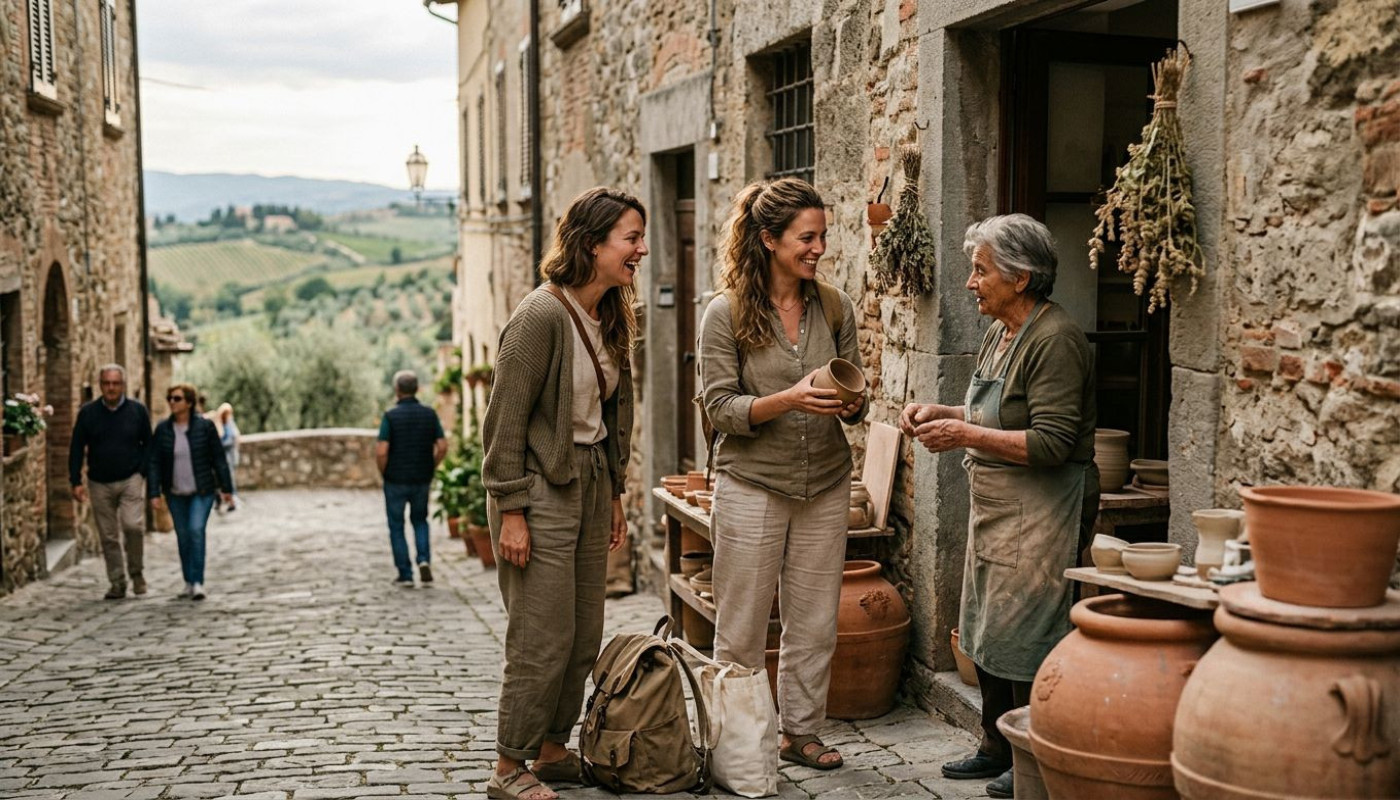
Why do some itineraries read like they were written by someone who has actually been there? Because they follow the grain of the place, and not just its headline attractions. Travelers increasingly run into the hard edges of contemporary tourism, from timed entries and capacity limits to neighborhood pushback against congestion, and an itinerary that ignores those realities can feel stressful, even if it is “logically” arranged.
Local rhythm is concrete: it includes opening hours that change by season, lunch breaks that still shape small towns, weekly closure days, last-entry cutoffs, and the simple fact that public transport frequency drops after certain hours. It also includes geography beyond maps, because two points that look close can be separated by a steep climb, a long wait for a ferry, or a bottlenecked bridge, and the traveler who plans with real-world friction in mind tends to arrive calmer, more curious, and more open to serendipity. In destinations with heavy demand, this is no small detail: when timed ticketing is required, missing a slot can mean losing the experience entirely, and the story you tell later becomes one of stress rather than discovery.
Food is another tell, because meals are not just refueling, they are anchors that can reveal a city’s cadence, and a strong itinerary places them in the right neighborhoods at the right times, rather than treating dining as an afterthought. If you have ever wandered hungry into an over-touristed strip and paid a premium for a mediocre plate, you already know how quickly that can sour an afternoon, and conversely, how a well-timed market stop or a family-run kitchen can become the emotional center of a day. This is also where smart planning tools matter, because they help travelers line up transport, pace, and reservations in a way that still feels spontaneous, and many people now use curated routes such as https://www.split-escape.com/ to avoid the generic loop while keeping logistics realistic.
The best days have one clear “spine”
Here is the counterintuitive truth: adding options can reduce satisfaction. Behavioral economists call it the paradox of choice, and travel is one of its most familiar stages, because every street seems to offer a better café, every viewpoint a better sunset, and every review a new “can’t miss.” A memorable itinerary reduces that cognitive noise by giving each day a simple narrative spine, one experience that defines what the day is “about,” and then letting the rest support it.
That spine can be thematic, a coastal day, a craft day, a ruins-and-wine day, or it can be spatial, staying within one district and going deeper. The benefit is not only emotional, it is practical: you cut transit time, you lower the risk of running late, and you preserve energy for the moment that matters. Data from urban mobility studies routinely show that short intra-neighborhood trips compound into significant time savings over a day, especially when you factor in waiting, navigation, and micro-delays, and those savings translate directly into better travel mood. When a day has too many “major” stops, fatigue becomes the hidden tax, and fatigue is the enemy of memory, because people remember peaks and endings, not a blur of middling experiences.
Designing a spine also makes it easier to decide what to skip, and skipping is a skill. The most seasoned travelers are not those who see everything, they are those who can say, without guilt, “not this time,” because they know that returning is part of the pleasure. If you want an itinerary people remember, plan one peak, plan one calm stretch, and plan a satisfying ending, a sunset viewpoint, a long dinner, a concert, a slow walk back, because the final hour of a day disproportionately shapes how the whole day is recalled. That is not romance, it is psychology, and it is a tool.
Good logistics are invisible, until they fail
No one reminisces about a well-timed connection, until they miss one. The most memorable itineraries often feel effortless, and that effortlessness is usually the result of unglamorous decisions made in advance, including buffer times, smart base selection, and a clear plan for arrival and departure days, which are notoriously fragile. When travelers stack long transfers with ambitious sightseeing, they convert what should be anticipation into anxiety, and small disruptions, a delayed train, a closed road, a stormy crossing, can collapse the whole structure.
Start with bases: staying one extra night in a well-chosen hub can outperform hopping hotels, even if it looks “less efficient.” Check-in and check-out eat hours, luggage changes how you move, and the mental load of re-orienting is real, so an itinerary that minimizes hotel churn often feels richer, not thinner. Then there is seasonality, which now has sharper edges; shoulder seasons can deliver better value and lighter crowds, but they also bring shorter opening hours and transport reductions in some regions, and heatwaves can make midday sightseeing unrealistic. If you plan a summer day in a southern city as if it were April, you will remember the exhaustion more than the cathedral.
Budgeting is part of logistics too, because costs shape choices in the moment, and the moment is where memory is made. In Europe, for example, a single popular attraction can range from free to the equivalent of 20 to 30 euros, and dining can swing just as widely between tourist corridors and residential streets, so a good itinerary anticipates high-cost days and balances them with low-cost pleasures, beaches, hikes, public gardens, viewpoints, markets. Reservations have become another pillar: restaurants, ferries, national parks, and even some urban landmarks increasingly require booking, and a memorable itinerary uses reservations as guardrails, not handcuffs, placing them at points that stabilize the day while leaving room around them. When logistics are done well, they disappear, and what remains is the place, the people, and the feeling that you had time.
How to plan without losing spontaneity
Book what truly sells out, and leave the rest breathable. Start with your non-negotiables, then design days with one main commitment, because that is the easiest way to stay both organized and open to surprise. If you are traveling in peak season, reserve timed entries early, especially for the most in-demand sites, and treat transport days as lighter, because fatigue and delays are normal. Build a budget with a 10 to 15% buffer, and check local or national tourism cards, city passes, and, where applicable, youth or student discounts, because they can change the cost of a whole week.
Similar articles